Complete Report of the Panel “Mechanized Grain Terminals: A Solution for Port Logistics Management”
Date: 29–30 September 2025 (8–9 Mehr 1404)

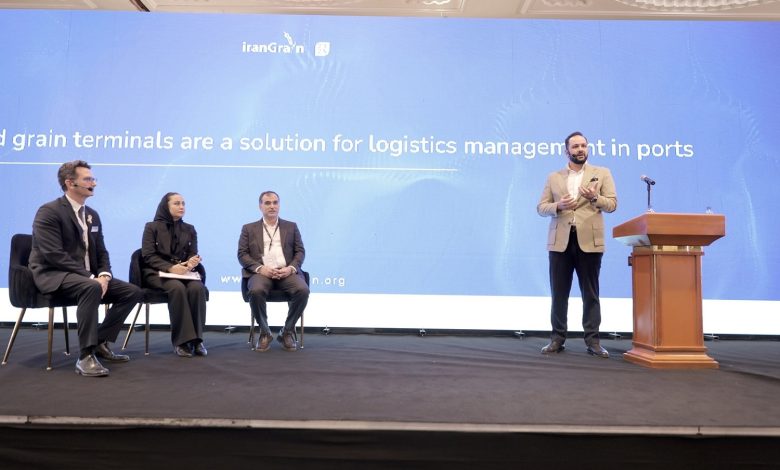
On the first day of the IranGreen 2025 Conference (29–30 September 2025), the specialized panel on “Port Logistics Management and Mechanized Grain Terminals” was held under the leadership of Mr. Ali Hashemi, Chairman of NilTejarat Artiman Company. This panel analyzed the challenges and solutions for upgrading port infrastructure, mechanized terminals, and grain logistics efficiency in Iran and worldwide. The presence of international experts and managers from ports and companies active in the grain industry provided an opportunity to discuss the latest achievements, technologies, and successful experiences in mechanizing ports and terminals.
Mechanized Grain Terminals: A Major Step Toward Smart Ports
Ali Hashemi, Chairman of NilTejarat Artiman, emphasized the importance of digital transformation in port management, stating that a “smart port” is no longer an option but a necessity for enhancing productivity, reducing costs, and increasing port competitiveness. He added that the integrated connection of sea and land, along with smart systems, is a vital prerequisite for realizing smart ports.
According to Hashemi, mechanized terminals with integrated transfer lines from the quay to silos reduce issues associated with traditional unloading using grabs and long truck queues. At Imam Khomeini Port, four mechanized terminals with a capacity of 1,200 tons per hour enable 24-hour operation without fossil fuels. Advantages of these terminals include weight, temperature, and humidity control, silo capacity monitoring, pollution control, and metal separation.
Hashemi also stressed the importance of a transit-oriented approach for silos so that grains are transferred directly from ships to trucks or railcars, reducing costs and operation time.
CESCO’s Leadership in Building Grain Terminals Worldwide
Mr. Martino Celeghini, CEO of the Italian company CESCO, presented the international achievements of the CESCO Group. The company, with 160 specialized staff and an annual turnover of €16 million, operates in the field of grain handling, storage, and processing in Europe and the Middle East.
CESCO’s notable projects include designing and implementing grain terminals in Germany (150,000 tons), Qatar (300,000 tons), and Saudi Arabia (200–324,000 tons). In the Alexandria Port renovation project in Egypt, CESCO upgraded conveyor systems and infrastructure using 3D scanning technology to improve operational efficiency and reduce costs.
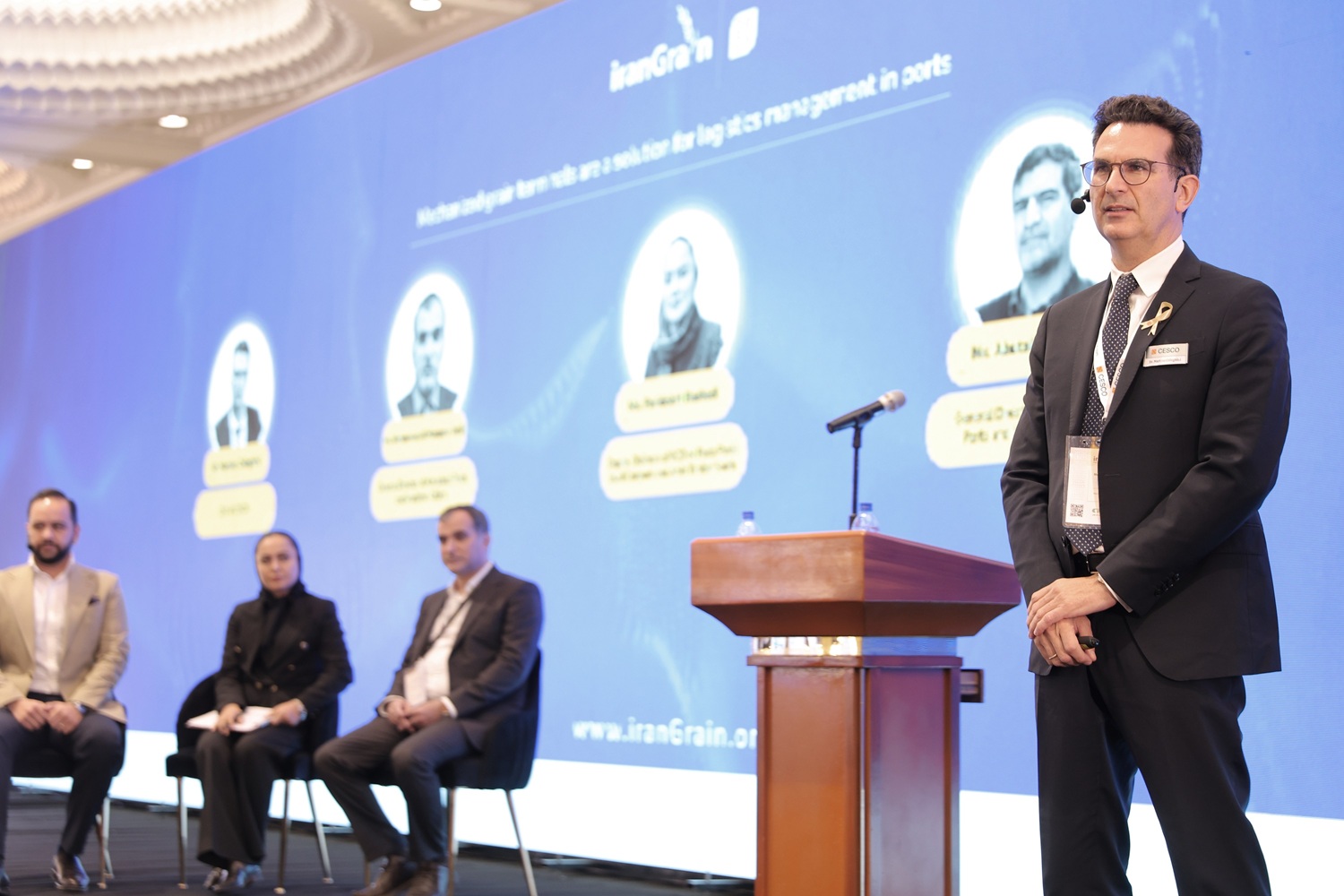
With a combination of international experience and engineering innovations, CESCO has established itself as a key player in the global grain industry.
Amirabad Port Capacity Increased to 650,000 Tons; Strengthening National Grain Logistics
Mohammad Ali Mousapour, Director General of Amirabad Ports and Maritime Administration, announced at the mechanized terminals panel that the annual cargo handling capacity at Amirabad Port will reach 650,000 tons by the end of this year.
He described this step as an effective measure to enhance Amirabad Port’s position in the national transport and logistics chain.
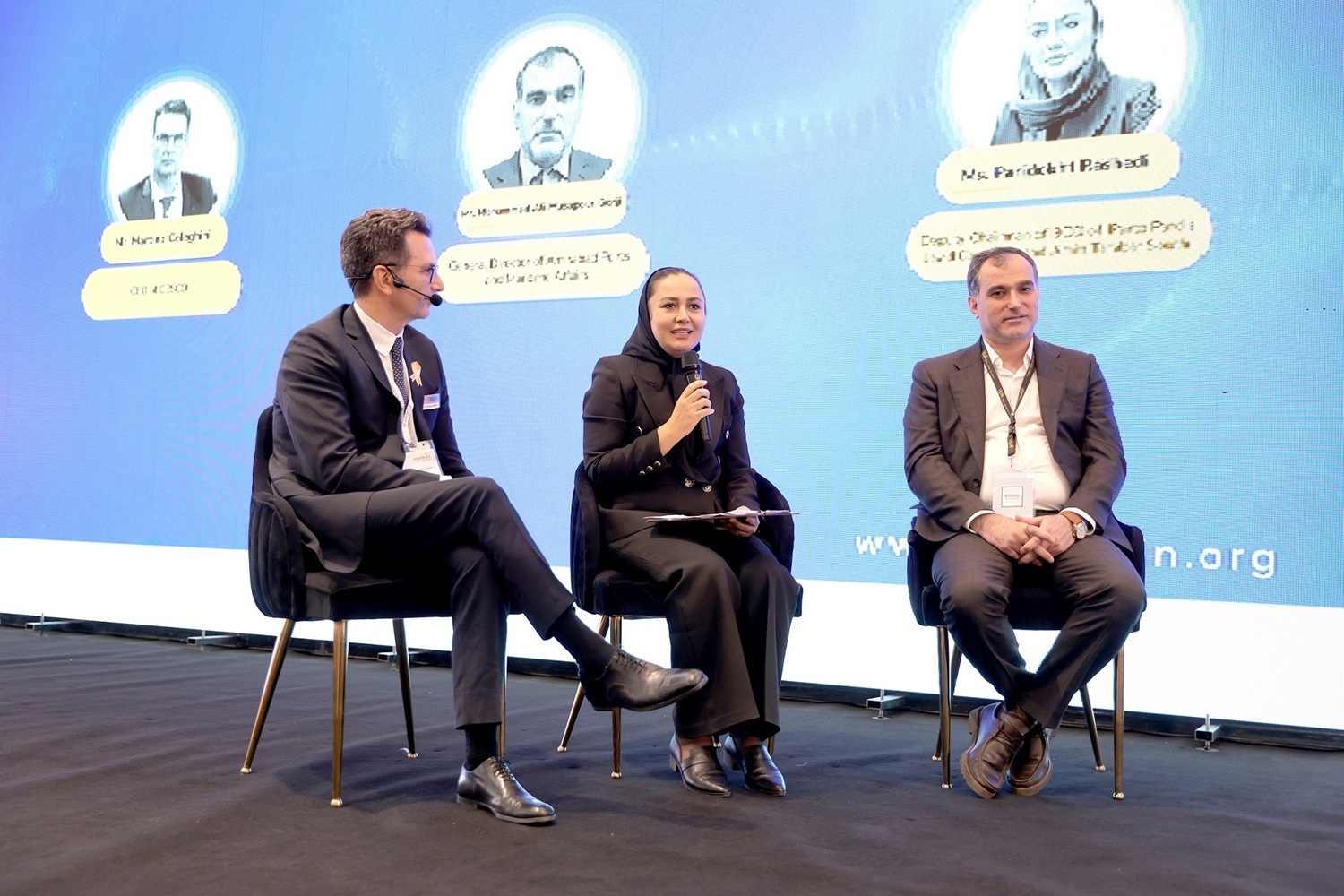
Referring to the entry of more than 3 million tons of essential goods last year, he emphasized that Amirabad Port plays a key role in ensuring the country’s food security. Considering climate change, utilizing mechanized capacities and modern logistics systems is essential to reduce product loss and increase operational speed.
Reducing Ship Downtime and Enhancing Operational Port Logistics at Imam Khomeini Port
Paridokht Rashdi, director of “Parto Pardis Javid” and “Amin Tarabar Jonoub,” highlighted operational challenges at Imam Khomeini Port and proposed strategies to improve efficiency, performance, and working conditions.

She emphasized the importance of welfare infrastructure for staff in hot seasons and praised her teams’ dedication during extreme conditions.
Rashdi noted that aging equipment and maintenance issues prolong ship anchorage, recommending gradual modernization, better access to spare parts, and private sector investment to reduce downtime. She also suggested transparent financial mechanisms to ease warehouse costs.
Finally, she called for better coordination among authorities and public-private collaboration to accelerate cargo clearance, enhance working conditions, and optimize port capacity utilization.