Panel on “Challenges of Grain Trade in Iran” at IranGrain Conference 2025
October 8–9, 2025 – Tehran

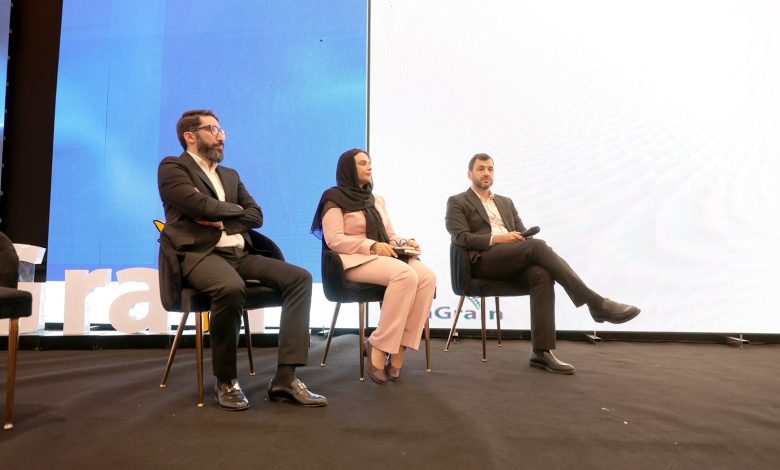
At the 5th IranGrain International Conference, the specialized panel “Challenges of Grain Trade in Iran” was held, moderated by Mr. Mohammadreza Soltani Shirazi, Executive Vice President of Armani Middle East Trade Development Co.
The panel featured three key speakers: Ms. Noushin Shahinfar, CEO of Zarrin Ghaleh Falat Co.; Mr. Hesamodin Mollasalehi, CEO of Hermes Tejarat Afaq Qeshm Co.; and Mr. Soltani Shirazi as panel director.
According to participants, this panel was among the most insightful and well-structured discussions of the 2025 conference, presenting a comprehensive overview of Iran’s essential commodities trade landscape.
A Comprehensive Reflection of Iran’s Essential Commodities Trade
An overview of opportunities and threats in the grain trade
Speaker: Mohammadreza Soltani Shirazi, EVP of Armani Middle East Trade Development Co.Mr. Soltani Shirazi reviewed import trends of essential goods in recent years, noting that in 2024, imports grew 11% in volume but declined 9% in value compared to 2023.
This inverse trend reflected falling global prices of feed grains and the government’s efforts to optimize import support mechanisms.
He highlighted the increasingly vital role of the private sector in supply chain management, planning, and financing import operations—thanks to its expertise, technological agility, and diversified supply networks. However, he pointed out key structural weaknesses, including limited training, insufficient digitalization, lack of data transparency, and underutilized port infrastructure.
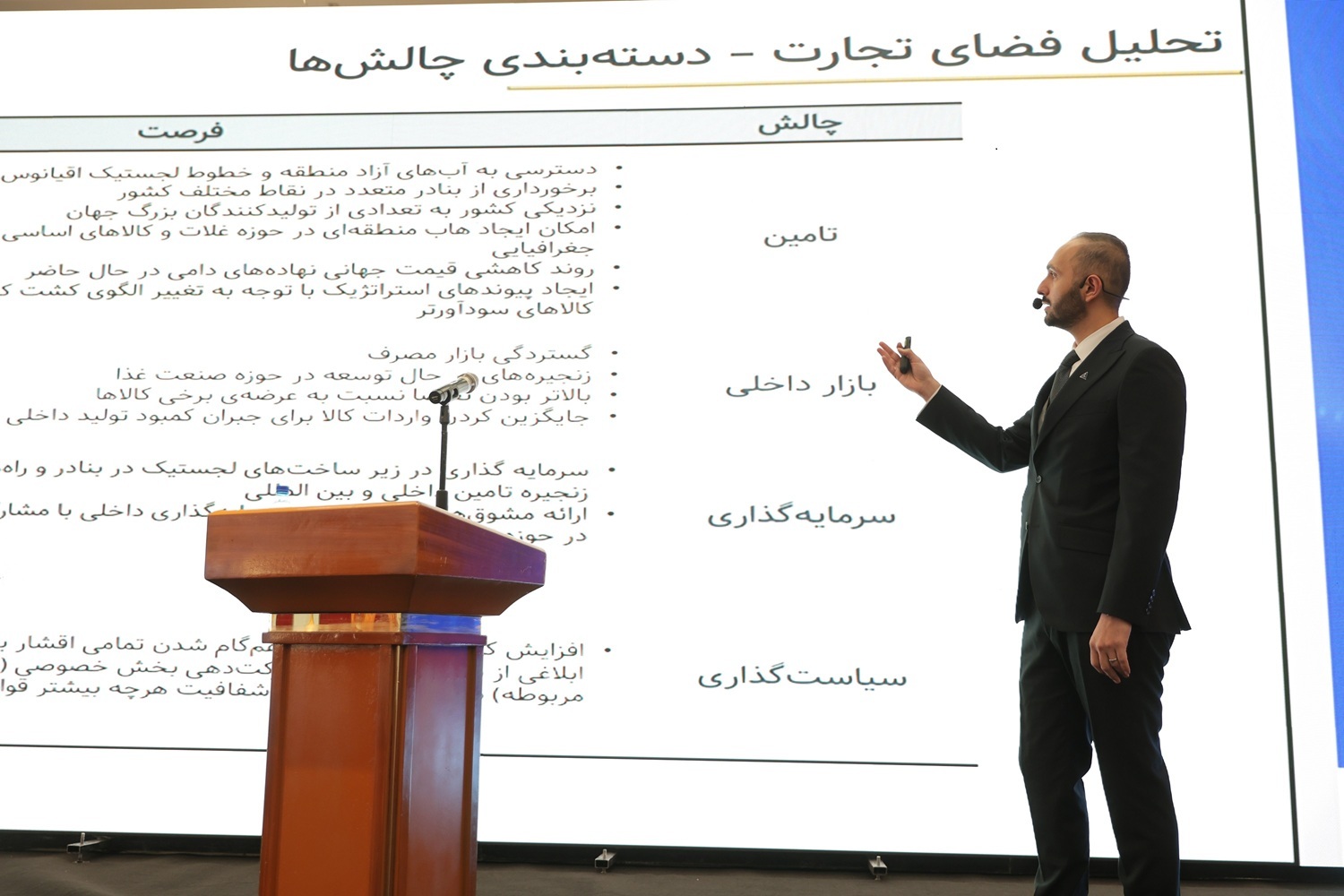
Opportunities and Threats for Iran’s Grain Trade
Iran’s geopolitical position offers major opportunities for trade development—such as wide consumer markets, access to open waters, and lower global prices. Yet, serious threats persist: international sanctions, Iran Premium in trade costs, foreign exchange instability, and excessive government intervention in pricing and distribution.
Mr. Soltani categorized the country’s main trade challenges into four areas:
- Supply: Expanding strategic reserves and aligning import models with global trends.
- Domestic Market: Strengthening value chains and financing models.
- Investment: Developing port infrastructure and encouraging private investment.
- Policy: Legal transparency, regulatory stability, and integrating private-sector participation.
Lack of Sustainable Balance Between Supply and Demand: The Key Challenge of the Feed Market
Speaker: Noushin Shahinfar, CEO of Zarrin Ghaleh Falat Co.
Ms. Noushin Shahinfar analyzed the domestic market, emphasizing the lack of a sustainable balance between supply and demand in livestock feed.
She noted that over-importation of corn and meal in 2023–2024 caused price fluctuations, while recent import declines pushed prices back toward regulated levels.
She pointed to Iran’s high dependence on imports and limited domestic production, warning that excessive reliance on Imam Khomeini Port has strained infrastructure, while neglecting Chabahar Port has limited logistics efficiency. Developing rail transport and diversified port networks, she said, could lower logistics costs by up to 20%.
According to Shahinfar, the recent shortage of feed inputs led to a 35% increase in dairy prices and a 40–50% rise in red meat and poultry prices. She concluded that strengthening the supply chain through domestic investment in production, infrastructure, and technology is essential to achieving long-term food security.
The Forgotten Role of the Private Sector in Policymaking
Speaker: Hesamodin Mollasalehi, CEO of Hermes Tejarat Afaq Qeshm Co.
Mr. Hesamodin Mollasalehi criticized the instability of trade regulations and the lack of transparency in policymaking. Despite the “Freedom of Information Act” (2009), he said the Ministry of Agriculture has shown minimal cooperation in sharing public data.
He described how unpredictable quota allocations and registration processes have disrupted business planning: “Each season brings a new surprise—companies don’t know if or how much they can import.”
Mollasalehi also condemned the opaque pricing system, which disregards global benchmarks and leads to inconsistent domestic prices. Furthermore, the import quota structure restricts new companies, preventing competition and innovation.
He concluded that the private sector is a strategic partner in ensuring food security, but without transparency, predictability, and genuine participation in policymaking, its effective contribution will remain constrained.