Full Report of the “Grain Trade and Risk Management” Panel at IranGrain 2025 Conference
Date: September 29–30, 2025

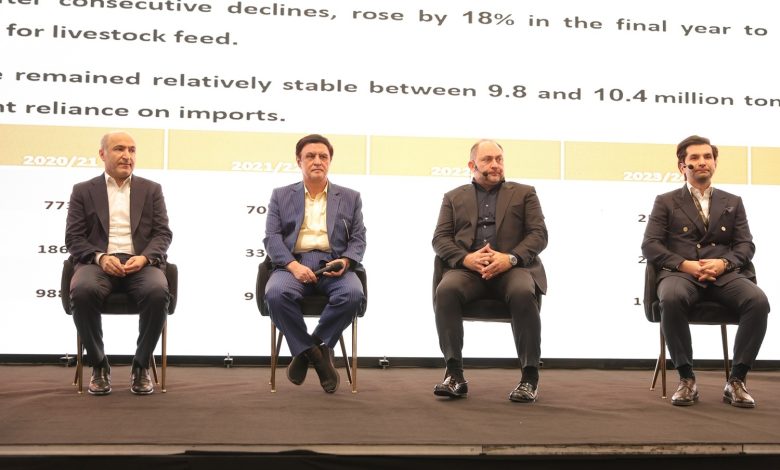
During the IranGrain 2025 International Conference, held in Tehran with the participation of key stakeholders in the agriculture, grain trade, and logistics sectors, the specialized panel on “Grain Trade and Risk Management” was moderated by Mr. Kaveh Zargaran, Chairman of the Board of Directors of the Iran Grains Union.
The panel also featured Mr. Saeed Rad, CEO of the Government Trading Corporation of Iran (GTC), and Mr. Parviz Jafari, CEO of the State Livestock Affairs Logistics Company (SLAL Co.), who shared their insights on global grain market developments, strategies for ensuring food supply stability, and mechanisms to enhance public–private sector cooperation in risk management.
Iran’s Transit Role in Regional Grain Trade Stronger Than Ever
Speaker: Kaveh Zargaran, Chairman of the Iran Grains Union
Kaveh Zargaran, Chairman of the Board of the Iran Grains Union and moderator of the “Grain Trade and Risk Management” panel at the IranGrain Conference, stated:
“International sanctions and banking and insurance restrictions have made financing and transporting grains increasingly difficult.
Moreover, the recent discussions around the reactivation of the ‘snapback mechanism’ could lead to the automatic reinstatement of the UN Security Council sanctions.”
He added that this uncertainty makes it harder for international players to decide on cooperation with Iran, influencing the costs of money transfers, cargo insurance, and price risks.
“In addition, regional geo-strategic tensions, including strained Iran–Israel relations, have affected the security of transportation routes in the Eastern Mediterranean, the Persian Gulf, and the Red Sea, increasing insurance rates, shipping costs, and overall trade risks,” Zargaran explained.
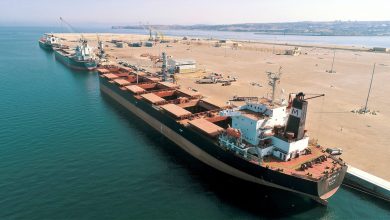
He continued: “At the same time, the shifting balance of power in the global grain market — the growing influence of Russia and Kazakhstan, export restrictions by some countries, and changes in the Black Sea trade routes — can create both opportunities and limitations. In this situation, Iran’s geographical position remains a significant advantage. We are located at the crossroads connecting Central Asia, the Caucasus, the Persian Gulf, and the Middle East, and we can use our transit and port capacities to reduce costs and ensure more stable access to grains.”
However, Zargaran emphasized that this advantage will only be effective “if trade policy stability and access to international banking and insurance services are maintained and strengthened.”
He also noted that wheat imports have reached more than 3.7 million tons, marking a 274% increase compared to the previous year, indicating that the country is relying more heavily on imports to compensate for production deficits.
“In the case of barley, imports have reached about 2.7 million tons, showing a 51% increase, but the decline in domestic production and lack of adequate reserves are concerning. In the second half of the year, at least 400,000 tons of barley per month must be imported to avoid market tensions,” he said.
Zargaran also stated that corn imports have decreased by 12% to around 4 million tons, warning that insufficient reserves and foreign exchange restrictions have created a worrying situation.
He concluded: “Soybean imports have grown by 32%, but soybean meal imports have decreased by more than 50%, which could pose supply challenges for the feed industry.
Optimizing the Imported Wheat Supply Chain Through Rail Transport in Iran
Speaker: Saeed Rad, CEO of the Government Trading Corporation of Iran (GTC)
Mr. Saeed Rad, CEO of the Government Trading Corporation of Iran, in his remarks at the IranGrain Conference, elaborated on the current state of essential commodities in the country.
He stated: “So far, about 886,000 tons of rice have been registered for import, of which 875,000 tons have already entered the country in the first six months of the year, and there are currently 312,000 tons of active import registrations. Part of these declarations belong to the year 2024.”
“In the case of crude oilseeds, 879,000 tons have been registered, of which 785,000 tons have been declared. There are 440,000 tons of active import registrations in this sector, and 50,000 tons have been allocated for domestic producers in the oil sector. Overall, with a stock of about 600,000 tons of crude oil, we are in a favorable position,” Rad added.
He continued: “In the edible oil segment, 49,000 tons have been registered, of which 273,000 tons have been declared, and 241,000 tons remain active. Given the available reserves, there is no concern about oil supply.”
Regarding sugar, Rad stated: “A total of 639,000 tons have been registered, of which 380,000 tons have been declared, and 603,000 tons remain active. Considering the good domestic production of sugar in 2024 and its harvest in November 2025, we do not expect any problems in this sector.”
He added: “In the barley sector, 2,686,000 tons have been registered, with 1,390,000 tons declared. There are 2,050,000 tons of active import registrations for the second half of the year, and with ministerial approval, the import ceiling will be raised.”
Rad also said: “A total of 1,594,000 tons of oilseeds have been registered, of which 1,416,000 tons have been declared, and 679,000 tons remain active.”
Discussing wheat procurement, Rad stated: “So far, in addition to about 800,000 tons of domestic purchases, more than 1.16 million tons of wheat have been purchased from foreign sources, bringing the total to around 3 million tons.”
He added: “In this regard, 22 ships carrying wheat are currently en route to Iranian ports, and part of these shipments will, for the first time, be transported by rail to destinations such as Mashhad, Astara, and Neyshabur.”
Rad emphasized that expanding the country’s rail logistics network and improving coordination among relevant agencies would lead to optimization of the imported wheat supply chain, ensuring greater stability in the supply of essential goods.
SLAL Co. Support Package to Strengthen Trust in the Livestock Feed Supply Chain
Speaker: Parviz Jafari, CEO of the State Livestock Affairs Logistics Company (SLAL Co.)
Mr. Parviz Jafari, CEO of SLAL Co., speaking at the “Grain Trade and Risk Management” panel of the IranGrain Conference, emphasized the importance of timely and stable supply of livestock inputs, saying:
“Today, ensuring the supply of livestock feed has become one of the most crucial pillars of national food security, and undoubtedly, this issue faces serious challenges. Solving these challenges will not be possible without constructive cooperation and interaction between government institutions and private sector actors.”
He pointed out the key role of the private sector in the supply chain:
“Without support and a proper understanding of the needs of private sector players, and without a strong commitment to solving their problems, it is unrealistic to expect the current challenges to be resolved. Continuous interaction and building trust are inevitable necessities.”
Jafari continued: “In recent months, the State Livestock Affairs Logistics Company of the Ministry of Agriculture Jihad has taken effective measures to supply the country’s required livestock inputs and strengthen strategic reserves, producing positive results.”
He also referred to the simplification of internal processes to encourage greater trader participation:
“We have been working to eliminate cumbersome procedures so that the company can collaborate more effectively with private sector stakeholders. We are ready to facilitate conditions for traders and move toward providing the necessary guarantees to increase confidence among livestock input suppliers.”
He added: “One of the main concerns of stakeholders in this field has been the issue of financing and ensuring the receipt of payments. Through new measures, we have tried to make this process more efficient so that traders and suppliers can operate with greater confidence.”