News Briefs
Ideal amount of trade between Iran and Switzerland
Iran-Switzerland Chamber of Commerce:

- Fereydoon Ahmadi, Khooshe Nesha’s CEO: More than 60 to 70 percent of Mazandaran’s rice milling workshops need renovation. These workshops and factories face problems while milling because when harvesting, the machines keep the grain’s moisture; therefore, they have to keep rice for a longer time which is not economically justified.
- Head of Confectioner’s Union: The ban on importing wheat is a very clever policy regarding politics; however, from the business point of view, there are problems and there should be some talks with the private sector. The milling plants have the capacity to give plans for this region’s flour markets and also fill the gap for the good quality wheat in other storages in Iran. The confectioners need the good quality wheat to produce high profile cakes and sweets.
- Harand Flour’s CEO: Allowing wheat imports, resting flour for 20 days before using and sieving flour before using in order to have more aeriation are all factors which lead to lower use of salt in bread and consequently a healthier bread. Mixing durum wheat with wheat in order to increase the quality is not a good solution because durum is only for the pasta industry.
- Ghaemshar’s Bakers Union Vice Chancellor: Because bakers have no choice in getting the subsidized flour, there are serious problems regarding the quality of flat bread in Mazandaran. Although there are problems in bread quality, there is no one who would accept the responsibility and do something about it. There are no substitutes for the low quality wheat!
- Association of food additives Chairman of the board: Value Added Tax is the tax that the government gets from the products at the end of the production process; however, in Iran it does not benefit the producers nor the consumers.
- Iran’s ambassador to Guinea: One of Iran’s concerns over the past years has been the overseas farming plan. In this regard, some countries have been chosen by Iran such as Kazakhstan. Iran is facing water shortage in the coming years and thinking about overseas farming plan in countries such as Guinea is a good solution.
- Head of Tehran Baker’s Union: Among the 75 thousand bakeries in Iran, there are 2000 surplus bakeries! With these 2000 bakeries, there is no room for the new bakeries which use non subsidized flour.
- Biglari, Member of Parliament: Today, gastric cancer in Iran is an epidemic and one of its main reasons is using low quality bread. The bread quality in comparison with the past has improved; however, it is still an issue for the health. Preventing these health problems by giving people the quality bread, would save the government tons of budget.
- Chabok Inspection’s salesperson: Flour exporters would only face problems with inspection companies when the wheat is milled in Iran and exported to Arab or African countries because the needed inspection of these countries is not PSI, the inspection is COC and the government of the country which the shipment is sent to, deals with exporters. It is only in this situation that the exporters would face challenges regarding inspection policies.
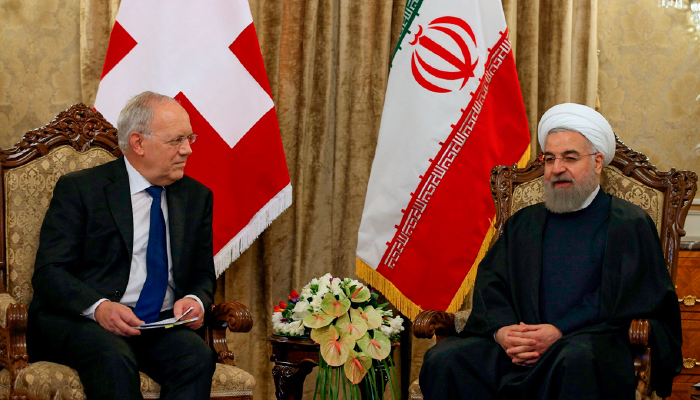
- Iran-Switzerland Chamber of Commerce: The ideal amount of trade between Iran and Switzerland is 2 billion dollars, the current amount stands between 900 million to 1 billion dollars. There are contracts being signed which will increase the amount of trade between the two countries.
- Abbassi Maroofan: Last year we had more than 5 million and 600 thousand tons of wheat in storages before the New Year. This year we have more than 9 million tons of wheat in our storages.