Iran’s Aviation Industry Faces Growing International Restrictions, Threatening Trade and Essential Supply Chains
Mr. Kazemi | Senior Advisor, Saman Aviation Services Company


Iran’s aviation industry is facing mounting operational, economic, and security-related restrictions that extend far beyond international flight cancellations. Limited access to airport services, fuel, aircraft components, insurance, and technical support is increasing operational costs, reducing network flexibility, and creating additional challenges for international trade and supply chains.
Describing the current situation as an aviation blockade may be misleading, as the challenges involve interconnected operational and service-related restrictions rather than a complete suspension of international flights.
Even when a flight route remains officially available, inadequate access to refueling, ground handling, maintenance services, or financial arrangements can prevent airlines from operating it.
The European Union Aviation Safety Agency (EASA) has extended its active safety advisory concerning the Tehran Flight Information Region (FIR) until November 16, 2026, recommending that affected operators avoid operating within the designated airspace. Such advisories can influence airline risk assessments and international route planning.
In the short term, fuel availability and ground handling services represent particularly sensitive operational bottlenecks. Over the longer term, access to certified aircraft parts, specialized maintenance equipment, and technical services becomes increasingly critical to maintaining fleet availability.
Expanding air connections with China and Russia could partially compensate for restrictions affecting regional destinations. However, these markets cannot fully replace established regional aviation hubs, which provide essential connections to wider international networks.
The feasibility of alternative routes depends on aircraft availability, airport capacity, ground support infrastructure, passenger and cargo demand, and overall flight economics.
Simultaneous disruptions to aviation and maritime transportation could pose a more significant threat to Iran’s essential commodity supply chains.
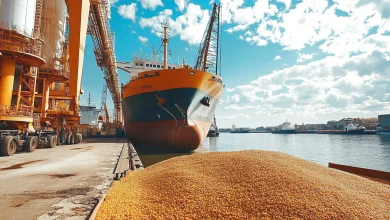
Air freight cannot economically or operationally replace maritime transportation for large-volume commodities such as grain, animal feed ingredients, edible oils, and agricultural fertilizers.
Its supporting role is primarily limited to urgent, high-value, and sensitive shipments, including pharmaceuticals, medical raw materials, and essential industrial components.
Any disruption to commercial shipping through the Strait of Hormuz could further increase import costs and complicate the supply of essential goods. The severity of these effects would depend on the duration of disruptions, available inventories, alternative transportation routes, and the strategic importance of individual commodities.
Rising insurance premiums, longer transportation routes, restricted access to aircraft parts, and increasingly complicated international payment mechanisms are also contributing to higher aviation operating costs.
Depending on the type of cargo and transportation arrangements, some of these additional expenses may eventually be reflected in logistics costs and final commodity prices.
Strengthening Iran’s aviation resilience requires more than increasing flight frequencies or introducing new destinations.
A sustainable strategy should prioritize route diversification, stronger domestic maintenance capabilities, improved access to technical services and certified aircraft components, and the development of integrated multimodal transportation networks.
Building a flexible aviation and logistics system capable of maintaining operations despite disruptions to individual routes will be essential to protecting international connectivity, supporting trade, and reducing vulnerabilities across Iran’s supply chains.