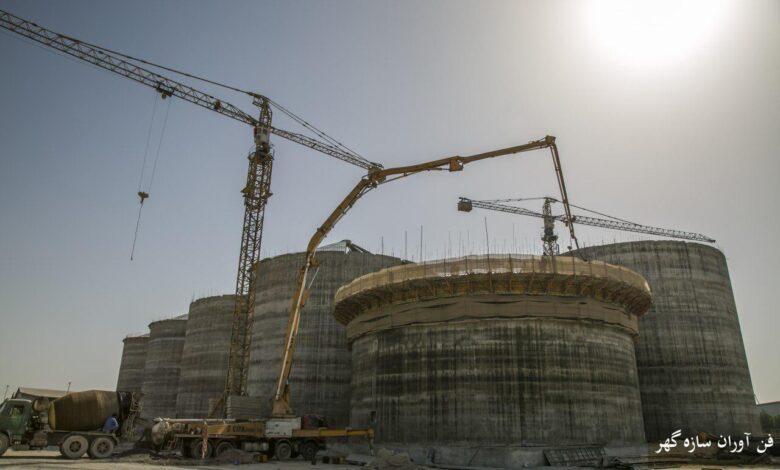
- In 2016-2017 the storage capacity in Iran increased by 1,700,000 tons which means that the grain storage capacity of Iran is including both governmental and public sector storages is 19,785,000 tons now. From this, 13,482,000 tons belong to the private sector and 6,303,000 tons belong to the government. Dibayee, head of technical section in GTC said that in 2016-2017, 30 billion Tomans were allocated for renovating silos and storages of the basic commodity.
- Nezam-ol-Din Aleshan Karami, CEO of Gohar Flour: Flour mills in southern parts of Iran have numerous problems with the heat. The wheat production in Hormozgan province is 55,000 tons which is only enough for 3 months of flour mill’s feed. The rest of the needed wheat should be carried to Hormozgan from other cities in Iran. However, the quality of the wheat which is sent to Hormozgan is not good at all and the gluten is too low.
At the moment the Commodity Exchange of Iran is the most important center for doing business, finding out about the new prices of different commodities in Iran. Buying and selling process should go through official brokers who have the permit to act as brokers in the commodity exchange. - The turnover of Iran’s agricultural market is more than 70 billion USD, however, 99.9% of it is in the hands of middlemen who are not satisfied with the current benefits from this market. Arman Taymaz Arass (Kesh Kala) Company has been in operation since 2009. This is startup with the aim to bring back fair business to the agriculture market in Iran. They are determined to omit middlemen in between and do the business directly with the main suppliers and farmers.
- Mansoori, Managing Director of the Economic section in Lorestan province: Regarding the use of whole bread and flour in this province, some reaseraches have been done; however, unlike the demand for this type of flour and bread, the flour quality is not good enough and we are looking for producing whole flour even in small volumes in Lorestan.
- Mellati, a disinfection technician in flour mills: The traditional way for disinfecting a flour mill was to use liquid solutions which were not economically justifiable. With the new technologies we can use less solution and also cover a vast area in the mill which will increase the rate of the job that could be done in a day.
Najafi Manesh, Head of Business Commission in Tehran Chamber of Commerce: Iran is 124 among 186 countries in the world regarding the business opportunities. Iran’s score in 2018 is 56.48 which in comparison with 2017 had a 0.26% increase. We are doing our best to increase this score, however, Iran does not have a good score in economic corruption which we must improve. - Secretary of Iran’s Yeast Syndicate: According to the 90% consumption of traditional flat bread in Iran, only 10% is left for the industrial bread. For this 10% we need about 40,000 tons of yeast; nevertheless, the total consumption of yeast for industrial bread is only 20,000 tons which is half the needed amount. This shows that even the industrial bread producers are not producing bread in the standard way.
- After the ban on importing wheat to Iran and the low quality of the local wheat, many flour mills came across deeper problems regarding their diagrams. Dr Abd Mahmoodi, flour mills diagram designer who is the CEO of Pooyan Sanat Consultants Company believes that these problems are related to two sections: winnowing and milling. For example, in the dampening section, the moisture percentage and the rest time should be considered in accordance with the season and also the type wheat being milled.
- Seyer Reza Gholami, Heas of Food Hygiene Office: only 20% of Iran’s bakeries are equipped with standard, modern technologies and the rest are working with old machinery.
- Amir Abdoli, a researcher in modern flour milling: The highest wheat hardness in Iran is 54 and lowest 45. In the world, 45 is considered an average quality wheat, this means that the local wheat in Iran is considered to have an average hardness and quality in the world, but why bakers are not happy with the flour quality? I believe that the answer would be not enough supervision in the planting process and also using wheat which has been damaged by pests.
- Hassan Abbassi Maroofan, Deputy of Foreign Trade in GTC: In order to keep markets such as Iraq and Afghanistan, we have tried very hard in the two years to make them ready for Iran’s flour exports. We suggest flour mills do not stop the temporary wheat imports for export purposes because exports are one of the priorities of GTC. It is predicted that Iran will buy more that 10.5 million tons of wheat from farmers in 1397 (2018-2019) and the total production would be 13 million tons, therefore, we do not need to import wheat in the current year.
- Ali Abharian, CEO of Gam Afarin Takta: Previously we have had problems regarding sanctions on Iran and we hope that at least some of European banks would be able to open LCs and continue working with Iranian banks. The only way to exchange foreign currencies in Iran is through banks, therefore, we need some European banks to work with us.