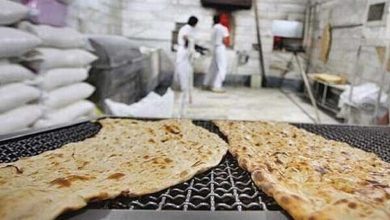
2 million tons of wheat have been imported
Arshadi, Manager of Tehran Grain According to the country's wheat import program

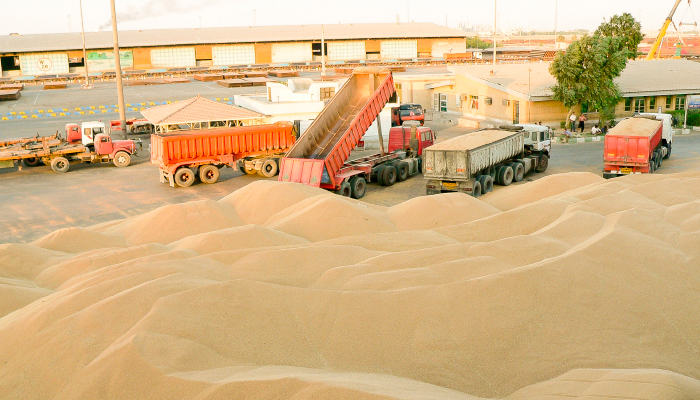
Mr. Anzanpour, General Manager of Bahonar Port & Maritime Administration, Port Operating Company of Nowshahr:
The maritime field is capable of accepting four million tons of goods annually. Approximately, 780 billion Rials of investment has been made by the private sector since 2013.
Ms. Asadbeigi:
In terms of standard, unfortunately, the production of bran is not in accordance with international standards, and the country’s flour mills have problems and restrictions to export their bran production despite this standard, because the surrounding countries consider Iranian bran to lack the necessary standards.
Mr. Damircheli, Head of Silo Holders Association:
At present, the storage capacity of the country’s silos, including public, private and adjacent silos of flour mills, is 18 million tons, that most of the time about 6 million tons of this space remains unused because the best guaranteed purchase statistics of the country’s wheat is about 12 million tons per year.
Member of Isfahan Flour Association:
Doubling the rate of flour bags in recent months has imposed a huge cost on the flour industry, despite the fact that the country’s petrochemical industry is local and does not need to be exported. The main reasons for this increase in bag prices in Iran are still unknown.
Karami, Head of Fantasy Bakers Union:
From 7.5 million tons of wheat consumed per year for bread production in Iran, 500,000 tons are used annually to produce flour for bulk and semi-bulk (fancy) bread production units. At present, the per capita consumption of bulk and semi-bulk bread and industrial bread in Tehran province is 20% per day and in other provinces this number is less and reaches %8-10.
Khalili, Managing Director of Silosazan Tehran Co.
Currently, due to sanctions and corona virus, many of Iran’s borders are closed to import equipment and raw materials to Iran, and the country’s silo construction industry, like other manufacturing industries, is limited due to the lack of thick and galvanized metal sheets.
Arshadi, Manager of Tehran Grain
According to the country’s wheat import program, more than 2 million tons of wheat have been imported into the country, of which 220,000 tons have been sold to Tehran so far, which has been distributed among the province’s factories and from the first decade of Mordad (22-31 July), with the depletion of imported wheat stocks, flour mills must use domestic wheat.
Najafian, Shams Azar Flour & Macaroni Company
Due to the fact that durum wheat is $ 60 to $ 70 more expensive than ordinary wheat, its importation is not economically viable for both the government and private sectors, which do not receive Nimaei Dollar.
Mr. Piltan, General Manager of Arabic-African Department of Trade Promotion Organization of Iran
Restrictions on increasing import tariffs and bans on not allowing goods into Iraq at certain times include 30 items in the agricultural, food and protein products.
The rules governing global trade, including health, quality, packaging, smuggling, transportation, insurance standards, and customs regulations in both countries, must be observed by traders and in the future, it is planned for a $ 20 billion trade to develop trade relations between Iran and Iraq.
Zargari, Secretary of Federation of Iranian Food Associations
The volume of grain consumption in the country is about 10 million tons of corn, 6 million tons of barley, 12 million tons of wheat and 4 million tons of oilseeds; the need to import and supply some of these products from other countries is felt because the potential of cultivation in Iran does not meet all these cases.